
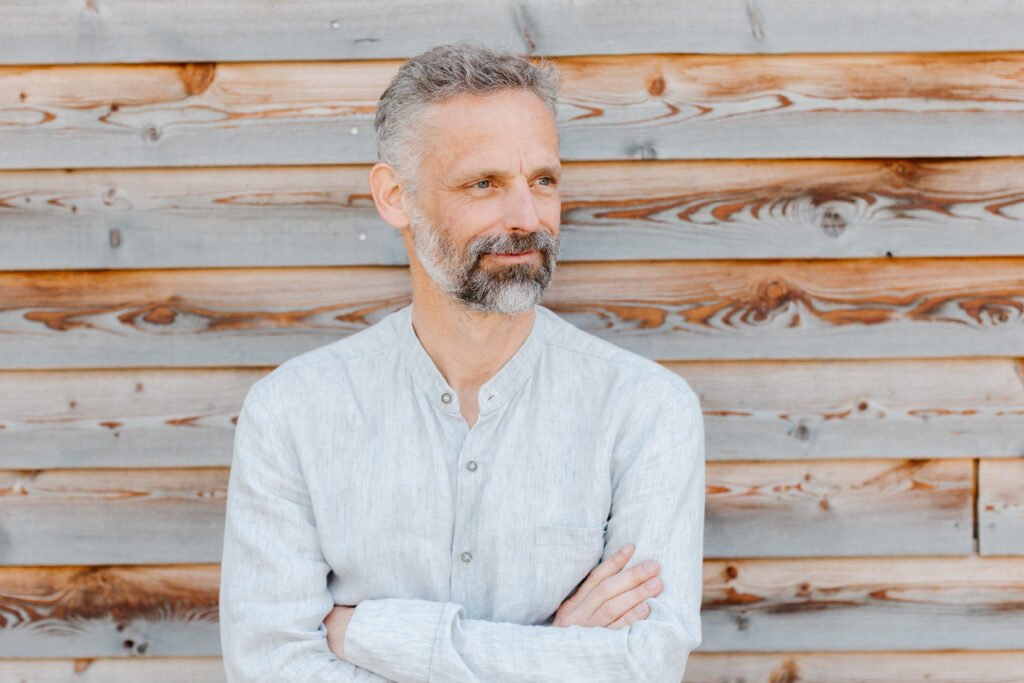
The European Outdoor Group (EOG) is the voice of the European outdoor industry, bringing together companies and organisations across the sector to support a stronger, more sustainable and innovative outdoor economy. Its work spans industry representation, knowledge sharing, research and collaboration, helping outdoor businesses navigate changing consumer behaviour, market developments and emerging opportunities. For EPSI, welcoming EOG in its community means connecting the sport innovation ecosystem with a sector where outdoor activity, wellbeing, sustainability and new technologies increasingly intersect. In this article, the EOG Director Christian Schneidermeier talks about how the outdoor industry of sports activities is evolving rapidly, while caring for the planet.
1. What are the biggest challenges currently facing the outdoor sector in Europe, and where do you see the greatest opportunities for growth and innovation?
«The outdoor sector in Europe is recovering and is on its way back to its previous position of strength, after some turbulence in the post-Covid times. After the sale of outdoor products peaked during the pandemic, the geopolitical developments with the war in Ukraine and inflation, and the subsequent reduction of consumer spending, led to the oversupply of goods. In spite of the multi-crisis that we are facing, it seems that consumption is rising again and the order books are filling up once more. However, the transformation of the retail landscape is continuing, shifting more and more from brick-and-mortar to online retailers only. Also, the aforementioned geopolitical instability remains a constant challenge for businesses and has a massive impact on prices and margins, whether in the form of more expensive raw materials or higher tariffs.
In general, the outdoor industry is a resilient sector, as being active outdoors will remain a major part of leisure for people, and different trends also offer different opportunities for growth. Right now, we are experiencing a trend towards running, especially trail running, as well as towards lighter products through lighter materials, and the huge movement to work on personal fitness and longevity.»
2. Sustainability has become a strategic priority across industries. How is the outdoor sector positioning itself compared to other consumer goods industries when it comes to ESG performance?
«The outdoor sector was focusing on sustainability long before other industries started to shift their strategies, and also before the wave of EU regulation on different aspects of sustainable business as part of the EU Green Deal made it mandatory. The environmental and social impact of how you do business was always a main driver in the business of outdoor companies and that led us to our vision at the EOG, that we want to facilitate profitable global business, but in a way that gives back more to nature and people than we take. We focus on this because we know that there is no business on a dead planet, and that is why we regard our industry as the frontrunner of sustainability in business.»
3. The Carbon Reduction Project is one of EOG’s flagship collaborative initiatives. What have been the most important lessons learned since its launch in 2021?
«Collaboration is essential. By working collectively with shared suppliers, brands can combine expertise and influence, reduce duplication and tackle challenges that would be difficult to address alone. Strong supplier relationships are critical. Decarbonisation needs to be a partnership. Open communication helps brands understand the financial, technical and infrastructure barriers that suppliers face, and supports them in implementing change. Decarbonisation takes time. Setting targets is only the beginning; the real challenge is implementing actions and tracking their impact over several years. Encouragingly, the ten facilities currently being monitored reported a 66% reduction in emissions between 2021 and 2024, reflecting both project-related and pre-existing actions. The biggest opportunities require systemic change. Renewable energy, coal phase-out and equipment upgrades offer significant reduction potential, but often require investment and solutions to wider infrastructure or to technical barriers. Overall, the project has shown us that meaningful supply-chain decarbonisation is possible, but it requires long-term commitment, good data, strong supplier relationships, and above all, collaboration across the industry.»
4. Your report on Alternative Footwear Materials highlights several emerging solutions. Which innovations do you believe have the greatest potential to transform the outdoor footwear market over the next decade?
«I believe the greatest potential lies in a combination of recycled materials and next-generation bio-based alternatives. In the short term, recycled polyester, nylon, EVA and rubber can reduce reliance on virgin resources, while fitting relatively easily into existing manufacturing systems. Longer term, innovations such as mycelium and hemp-based materials, algae and bio-based foams, and materials created from agricultural and food-industry waste, could be particularly transformative. Rather than one material replacing everything, we are likely to see footwear combining different solutions across the upper, midsole, outsole and adhesives. The key will be ensuring that these innovations can deliver the durability and technical performance required by outdoor footwear, while becoming commercially scalable and genuinely reducing environmental impact.»
5. In your view, what makes collaboration particularly important in the outdoor industry compared to other sectors?
«I am a strong supporter of collaboration in general. I think there is no difference between industries. The challenges we are facing today, are impossible to manage alone and in isolation. Just think of the circular economy. We need to get away from the massive consumption and exploitation of Earth’s natural resources. One way is to design products differently to keep materials in the loop. This loop is only possible if different stakeholders in the value chain are collaborating. Also, we need to transform our economy, and it is for the benefit of everyone if ideas and best practices are shared. Co-creation is one of the most important skills for the future in general, and certainly for sustainable business.»
6. Looking ahead to the next decade, what does success look like for the European Outdoor Group and for the outdoor industry as a whole?
«We are successful as an association, as an industry, and as a society, if we manage to overcome the different crises we are facing and that are risking human life on this planet. It is not just climate change; it is also the loss of biodiversity and the rising gap between poor and rich people. As an industry, we can have a massive impact on the development of human beings and human societies by reconnecting people with nature and making them understand that we humans are part of the natural world and not able to control it. We should bring as many people as possible back to nature, to understand that and have an impact on their way of life.»