On the ground in Trondheim: linking Nordic sport research to European opportunities

Share this post

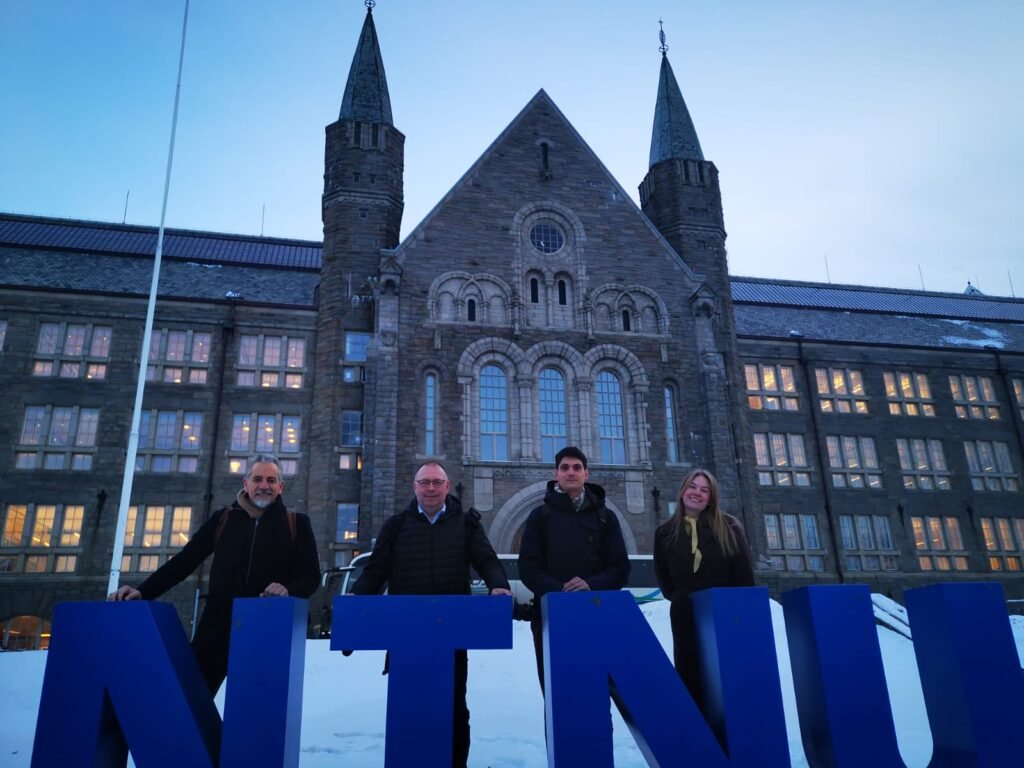
As part of a renewed EPSI approach to meet members on site and establish closer, working-level relationships, EPSI Executive Director Alberto Bichi and Deputy Director Sebastiano Lommi visited the Norwegian University of Science and Technology (NTNU) in Trondheim (Norway) from the 14th to the 16th of January. The visit aimed to move beyond formal membership and focus on how collaboration can work in practice within the European innovation ecosystem. In this context, EPSI strives to connect academic and applied expertise with European opportunities, partnerships, and funding mechanisms.

Innovation and European collaboration

Universities are increasingly understood as complex systems rather than standalone infrastructures. Sustainability, accessibility, and long-term management are currently some of their major focus, but they need to be addressed in the right way. Furthermore, universities act as living labs for innovation. This is why EPSI membership can help transform strong local expertise into European-level impact. NTNUNorwegian University of Science and Technology, is the largest university in Norway, with about 45,000 students and a broad interdisciplinary academic portfolio. SIAT – Centre for Sport Facilities and Technology is instead the NTNU research centre that combines theoretical and experimental research and collaboration, nationally and internationally, with a clear focus on societal relevance. Now, this expertise is ready to be positioned within European innovation processes in the sports sector, including EU-funded projects and international partnerships.

The importance of being there

For EPSI, in-person engagement is not symbolic. From 2026 onwards, we are implementing a new agreement with the new members, which includes meeting members on site, allowing for a deeper understanding of their context, priorities, and constraints that cannot be fully captured through online meetings or project-based interactions alone. This visit to Norway was part of a broader effort to strengthen human connections as a prerequisite for effective collaboration. This approach supports more realistic project development and long-term cooperation built on trust and mutual understanding. In Trondheim, this was possible thanks to the warm welcome and excellent organisation of Stein Cato Røsnæs (Sports Coordinator at Østfold County Council), Olav Torp (Associated Professor and Head of the Centre for Sports Facilities and Technology at SIAT), André Flatner (BIAA Competence Network Lead), Bjørn Åge Berntsen (Senior Administrative Coordinator at NTNU), Øyvind Løkke Vie and Ole Øiene Smedegård (Researchers at NTNU Centre for Sports Facilities and Technology), and Mia Olden Larsen (Research Assistant at SIAT).

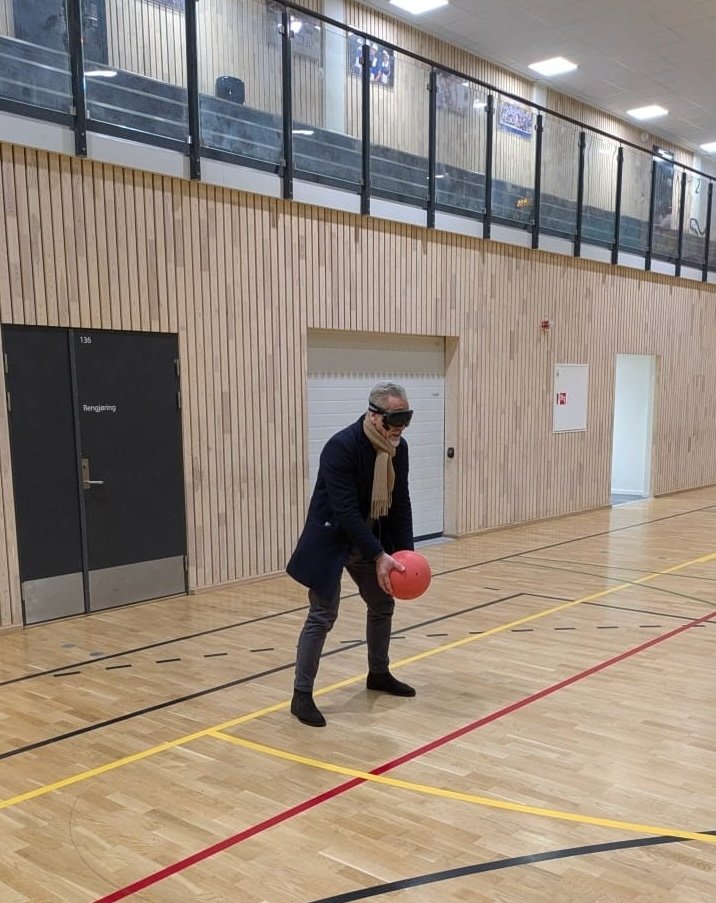
A central part of the visit focused on how NTNU’s research translates into tangible benefits for students, local communities, and organisations. Through SIAT, NTNU already supports planning, construction, operation, and management of sports facilities with strong societal relevance. Site visits during the programme reinforced this perspective. At Paraidrettssenteret in Trondheim, Norway’s first dedicated parasports centre, Alberto and Sebastiano stepped directly into inclusive sport, trying wheelchair basketball and blind football. A hands-on experience that highlighted how inclusive design, universally accessible facilities, and free services support participation, competence development, and sport innovation.  At Granåsen Sports Park, discussions highlighted how elite sport venues can also function as community assets, youth development environments, and year-round activity spaces.

A gateway to the North

Rather than expanding through formal agreements alone, sports and educational centres of the Nothern Europe are more and more connecting, creating a network rooted in active collaboration, where universities, research centres, and sport organisations play a visible role in shaping European agendas. Their increasing engagement is bringing sports innovation to another level, because the regional specificities and working cultures have a great added value for the sports sector. This discussion took place against the background of EPSI’s increasing engagement in the Nordic region, following collaborations with several Nordic organisations during the last EPSI Annual Conference in Rovaniemi (FI).

In this framework, NTNU represents a key partner: not only for its academic capacity, but also for its ability to connect research with practice through sport facilities, local communities, and industry links. The meeting in Trondheim helped identify how such strengths could be mobilised in future European projects and initiatives.

A shared direction

The discussions did not aim to define immediate outputs, but to align on direction. Human interaction, mutual understanding, and a shared ambition to scale Northern innovation to the European level emerged as the central objectives of the visit. Within this perspective, EPSI membership is not an end in itself, but a platform for collaboration, visibility, and impact across borders.